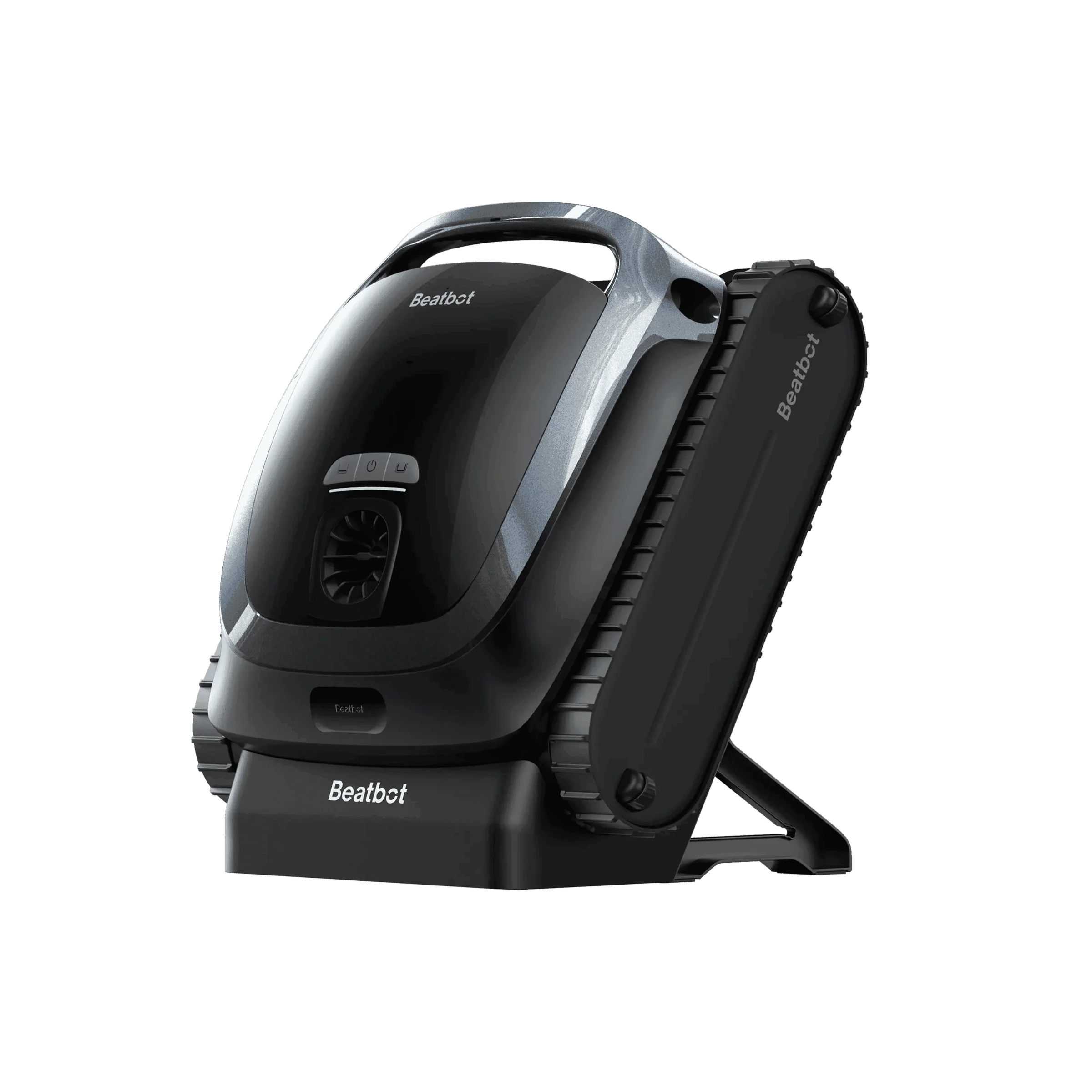
A robotic pool cleaner is the most capable of the three main pool cleaning types, cleaning the floor, walls, waterline and, on some models, the surface, using its own motor and AI navigation. Pressure-side and suction-side cleaners instead rely on the pool's existing pump and a hose connection to move around. For most Australian pools, a cordless robotic pool cleaner such as the Beatbot AquaSense 2 Ultra or Beatbot Sora 30 delivers more thorough coverage with less strain on pool equipment than either a pressure-side or suction-side unit. Here's how the three types actually compare.
What's the difference between robotic, pressure and suction pool cleaners?
The three types differ in how they're powered and how they move around the pool. A robotic pool cleaner has its own motor, filter and navigation system and plugs into a standard power point, completely independent of the pool's pump. A pressure-side cleaner connects to the pool's pressure return line, often via a dedicated booster pump, and is pushed around by water pressure. A suction-side cleaner connects to the skimmer or a dedicated suction line and is pulled along by suction from the pool's main pump.
Robotic pool cleaners. Cordless robotic cleaners like the Beatbot range have no hose or cord tethering them to the pool edge, so they can reach corners, steps and walls that hosed cleaners often miss. They carry their own onboard filtration, meaning debris never passes through the pool's main filter, and they use AI navigation to plan a path around the pool. The Beatbot AquaSense 2 Ultra uses HybridSense AI Pool Mapping, combining 3D camera vision, infrared and ultrasonic sensing to build a map of the pool and optimise its cleaning path, while CleverNav smart navigation and SonicSense obstacle avoidance run across the wider Beatbot range.
Pressure-side cleaners. These need a hose connection to the pool's pressure line and, in many cases, a separate booster pump to generate enough force to drive the cleaner. They collect larger debris in an onboard bag and can be reasonably effective on pool floors, but they generally don't clean the waterline or surface, and their coverage pattern depends on water flow rather than AI navigation.
Suction-side cleaners. These are the simplest and cheapest to buy. They have no motor of their own, relying entirely on the pool's main pump for suction, and any fine debris they pick up passes straight through to the pool's main filter, adding to its workload. They're typically limited to the pool floor, move around the pool in a largely random pattern, and are tethered by a hose that can limit reach into corners and steps.
Which type cleans best?
Robotic pool cleaners clean best overall because they combine independent power, onboard filtration and AI navigation to cover the floor, walls, waterline and, on select models, the surface in a single pass. Pressure-side and suction-side cleaners can handle basic floor debris reasonably well, but both are limited by their dependence on the pool's pump and a physical hose connection, and neither reaches the waterline or surface the way a robotic cleaner does. The table below breaks down how the three types compare across the factors that matter most.
| Feature | Robotic pool cleaner | Pressure-side cleaner | Suction-side cleaner |
|---|---|---|---|
| Cleaning coverage | Floor, walls and waterline, plus surface on 5-in-1 models like the Beatbot AquaSense 2 Ultra | Mainly floor, limited wall coverage, no waterline or surface | Floor only, limited wall reach, no waterline or surface |
| Installation | Plugs into a power point, no plumbing required | Connects to the pressure return line, often needs a dedicated booster pump | Connects to the skimmer or a suction line, uses the existing pump |
| Running cost | Independent low-voltage motor, doesn't add to pool pump run time | Pool pump (plus booster pump, if fitted) must run during every clean | Pool pump must run during every clean, adding strain to the pump and filter |
| Maintenance | Empty and rinse the onboard filter basket; charge on dock (wireless on AquaSense 2 range, cable on Sora range) | Empty the debris bag regularly, service the booster pump | Clean the pool filter more often since fine debris passes through it; hose and diaphragm parts wear over time |
| AI / navigation | AI mapping and navigation, for example HybridSense AI Pool Mapping on the AquaSense 2 Ultra and CleverNav across the range | Preset or pressure-driven movement, no AI | Largely random movement, no AI |
Which is cheapest to run?
A robotic pool cleaner is the cheapest to run day to day because it has its own low-voltage motor and doesn't need the pool's main pump running during a clean. Pressure-side and suction-side cleaners both depend on the pool pump for every cleaning cycle, and a pressure-side system with a booster pump adds a second piece of equipment drawing power each time it's used. Over a typical Australian pool season, that difference in pump hours adds up, even though a robotic cleaner carries a higher purchase price upfront.
Suction-side cleaners are usually the least expensive to buy, pressure-side systems sit in the middle once a booster pump is factored in, and robotic cleaners typically cost more upfront. What robotic cleaners save on ongoing pump running time and plumbing maintenance often closes that gap over the life of the cleaner, particularly for pool owners who already run their pump on efficient, shorter cycles and don't want to extend pump hours just to run a hosed cleaner.
Which should you buy for an Australian pool?
For most Australian pools, a cordless robotic pool cleaner is the best choice because it suits salt-water and chlorine pools, in-ground and above-ground designs, and copes well with the leaf litter common under eucalypts, without needing extra hoses or a booster pump. The Beatbot AquaSense 2 Ultra suits larger or more complex pools where owners want the most thorough single-robot clean, including full HybridSense AI Pool Mapping and water clarification. The Beatbot Sora 30 is a strong-value robotic option at $1,499 for pool owners who want cordless, AI-guided cleaning of the floor, walls, waterline and platform without paying flagship pricing.
Pressure-side and suction-side cleaners remain valid choices in some situations, for example where a pool is already plumbed for a pressure-side system, or where budget is the deciding factor and basic floor cleaning is all that's needed. But for pool owners weighing up a new purchase, a robotic pool cleaner covers more of the pool, needs less ongoing plumbing maintenance and doesn't add to the pool pump's workload. Browse the full Pool Cleaner Robot collection to compare specifications side by side, read the Beatbot AquaSense 2 Ultra review for a closer look at the flagship model, or see Sora vs AquaSense: Beatbot range compared to work out which robotic model fits your pool and budget.
Frequently Asked Questions
What's the main difference between a robotic and a suction pool cleaner?
A robotic pool cleaner has its own motor, filter and AI navigation and plugs into a power point, while a suction-side cleaner has no motor of its own and relies entirely on suction from the pool's main pump to move and collect debris.
Do pressure-side pool cleaners need a booster pump?
Many pressure-side pool cleaners need a dedicated booster pump to generate enough water pressure to drive the cleaner, which is a separate piece of equipment to buy, install and run alongside the main pool pump.
Are robotic pool cleaners worth the extra upfront cost?
For most Australian pools, yes. A robotic pool cleaner cleans the floor, walls and waterline, plus the surface on select models, in one pass, runs independently of the pool pump, and typically needs less ongoing plumbing maintenance than a pressure-side or suction-side system.
Can a robotic pool cleaner clean the waterline and steps?
Yes. Robotic pool cleaners such as the Beatbot AquaSense 2 Ultra use AI navigation to climb walls and clean the waterline as part of their cleaning cycle, which suction-side and most pressure-side cleaners cannot do.
Which Beatbot robotic pool cleaner suits a first upgrade from a suction cleaner?
The Beatbot Sora 30 is a great-value robotic option for pool owners upgrading from a suction-side or pressure-side cleaner, offering cordless, AI-guided cleaning of the floor, walls, waterline and platform for $1,499.
Do robotic pool cleaners work on salt-water pools?
Yes. The Beatbot AquaSense range is suited to salt-water and chlorine pools, and cordless robotic cleaning avoids the extra plumbing connections that pressure-side and suction-side systems need.